


Blog記事一覧 > 施術,疲労,痛み,筋肉,肩こり,腰痛,膝痛,血流,足がつる,首の症状 > Shinjuku Travel Recovery Massage|For Tired Legs, Stiff Shoulders, and Back Discomfort
Shinjuku Travel Recovery Massage|For Tired Legs, Stiff Shoulders, and Back Discomfort
【Key Points of This Article】
If you feel tired after walking around Tokyo, carrying luggage, taking long flights, or visiting many sightseeing spots, your legs, shoulders, neck, back, and lower back may become stiff or heavy. During travel, your body is affected by long walking distances, hard shoes, heavy backpacks, hotel beds, train rides, and jet lag. At Nishishinjuku 7-Chome Japanese Physical Therapy & Bone-Setting, we provide body care for travelers who want to recover from tired legs, stiff shoulders, back discomfort, and travel fatigue in Shinjuku. We check not only the painful area, but also posture, walking pattern, pelvis, hips, shoulder blades, rib cage, breathing, and muscle tension through anatomy-based clinical reasoning.
Feeling tired after walking around Tokyo?
Tokyo is exciting, but it can be physically demanding.
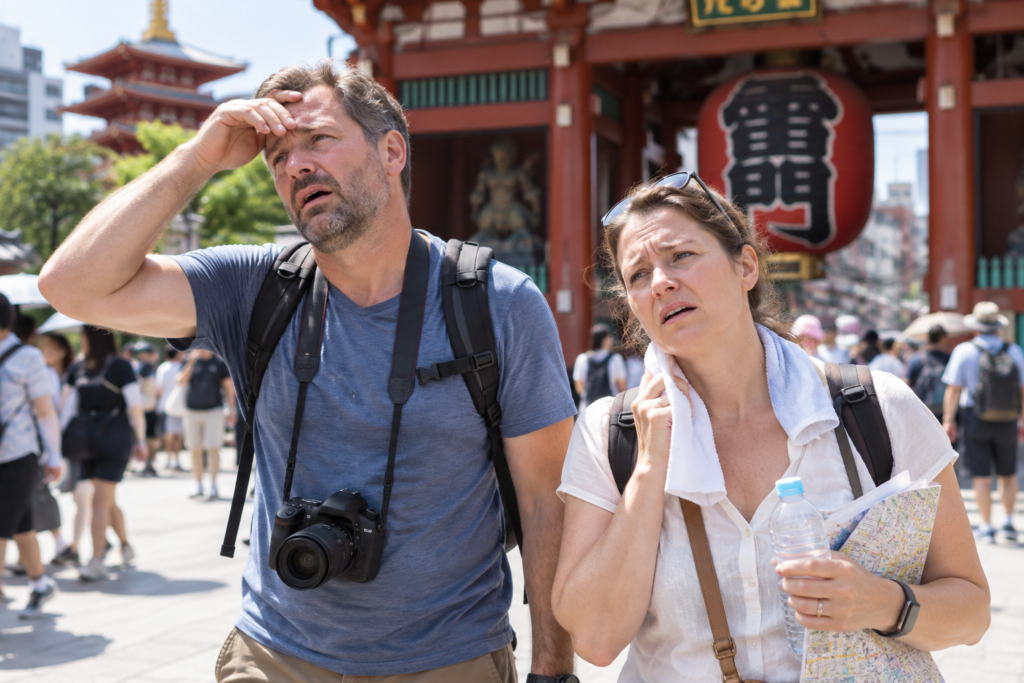
You may walk through Shinjuku, Shibuya, Harajuku, Asakusa, Ginza, and many train stations in one day. You may carry a backpack, pull a suitcase, stand on crowded trains, climb stairs, and sleep in a hotel bed that feels different from home.
At first, it may feel like normal travel fatigue.
But by the evening, you may notice:
Your legs feel heavy.
Your lower back feels tight.
Your shoulders feel stiff from carrying luggage.
Your neck feels tired from looking at maps and your phone.
Your whole body feels tense, even after returning to your hotel.
If this sounds familiar, your body may need more than simple rest.
Why travel makes your body stiff
Travel fatigue is not only about being tired.
When you walk for many hours, your feet, ankles, knees, hips, pelvis, and lower back all work together. If your shoes are hard, your walking distance is long, or your body is already tired from the flight, your lower back may receive more stress than usual.
When you carry luggage or a backpack, your shoulders and neck must support extra weight. If the bag is heavy or carried mostly on one side, your body may lean or twist slightly without you noticing. This can create tension in the shoulders, back, and lower back.
When you look down at your phone for maps, messages, or translations, your head moves forward. This position can increase stress on the neck and shoulders.
In other words, travel fatigue is often a full-body problem.
Tired legs can lead to lower back discomfort
Many travelers think tired legs and lower back discomfort are separate problems.
However, they are often connected.
When your legs get tired, your walking pattern changes. Your steps may become shorter. Your hips may move less. Your pelvis may become less stable. As a result, your lower back may start working harder to support your body.
This is why some travelers feel lower back discomfort after a full day of sightseeing, even if they did not injure their back.
At Nishishinjuku 7-Chome Japanese Physical Therapy & Bone-Setting, we look at how your legs, hips, pelvis, and lower back work together. We do not simply press the painful area. We try to understand why the discomfort appeared during your trip.
Heavy luggage can cause stiff shoulders and neck tension
Suitcases, backpacks, shoulder bags, and camera bags can all affect your body.
A heavy backpack may pull your shoulders backward, while your head and chest move forward to keep balance. A shoulder bag can pull one side of your body downward. A suitcase may make one arm work harder while walking.
These small changes can create tension around the neck, shoulders, shoulder blades, and upper back.
If your shoulders feel stiff after carrying luggage around Tokyo, it is not just because the muscles are tired. Your posture, shoulder blade movement, rib cage mobility, and breathing may also be involved.
Long flights and hotel beds can make the body harder to recover
Long flights often involve sitting for many hours. During a long flight, your hips stay bent, your lower back stays in one position, and your blood flow may slow down.
After arriving in Japan, jet lag can also affect recovery. If your sleep quality is low, your muscles may not relax fully. Even if you sleep, your body may still feel heavy the next morning.
Hotel beds and pillows may also feel different from what you use at home. This can affect your neck, shoulders, and lower back.
That is why many travelers feel stiff after a flight, even before sightseeing begins.
Body care in Shinjuku for tired travelers
At Nishishinjuku 7-Chome Japanese Physical Therapy & Bone-Setting, we support travelers who want to recover during their Tokyo trip.
We focus on areas such as:
Tired legs from walking.
Stiff shoulders from luggage.
Lower back discomfort after sightseeing.
Neck tension from smartphone use.
Back stiffness after long flights.
Whole-body travel fatigue.
Our approach is based on anatomy and clinical reasoning. We check how your posture, walking, hips, pelvis, shoulder blades, rib cage, breathing, and muscle tension are connected.
The goal is not only to make you feel relaxed for the moment, but to help your body feel easier to move during the rest of your trip.
Easy access in Nishishinjuku
Nishishinjuku 7-Chome Japanese Physical Therapy & Bone-Setting is located in Nishishinjuku 7-Chome, within walking distance of Shinjuku Station, Nishi-Shinjuku Station, and Shinjuku-Nishiguchi Station.
This location is convenient for travelers staying near Shinjuku, Nishishinjuku, Kabukicho, and nearby hotels.
We are open on weekdays with reception until 8:30 PM, closing at 9:00 PM.
On Saturdays and public holidays, reception is until 3:30 PM, closing at 4:00 PM.
We are closed on Sundays.
If you feel tired after sightseeing, shopping, business meetings, or walking around Tokyo, it is easy to visit after your day.
When you should see a medical doctor first
Body care may be suitable for travel fatigue, muscle stiffness, tired legs, shoulder stiffness, and mild back discomfort.
However, if you have strong numbness, severe pain, chest pain, difficulty breathing, fever, dizziness, injury from a fall, loss of strength, or symptoms that are getting worse, please see a medical doctor first.
If your discomfort feels like ordinary travel fatigue, stiffness, or muscle tension from walking and carrying luggage, Nishishinjuku 7-Chome Japanese Physical Therapy & Bone-Setting may be a good place to consult.
Enjoy the rest of your Tokyo trip with a lighter body
Your trip to Japan should not be limited by tired legs, stiff shoulders, or lower back discomfort.
Walking around Tokyo is part of the experience.
But when your body becomes too tired, sightseeing becomes harder to enjoy.
If you want to recover from travel fatigue in Shinjuku, visit Nishishinjuku 7-Chome Japanese Physical Therapy & Bone-Setting.
We will check your body carefully through anatomy-based clinical reasoning and help you feel more comfortable for the rest of your Tokyo trip.
Nishishinjuku 7-Chome Japanese Physical Therapy & Bone-Setting
Nishishinjuku 7-Chome, Shinjuku, Tokyo
Near Shinjuku Station, Nishi-Shinjuku Station, and Shinjuku-Nishiguchi Station
Phone: 03-6908-7120
Online booking available 24 hours